Pay for your fees and charges Pay Now
+233 (0) 243 211 345 info@ama.gov.gh GA-143-6657
Pay for your fees and charges Pay Now
+233 (0) 243 211 345 info@ama.gov.gh GA-143-6657

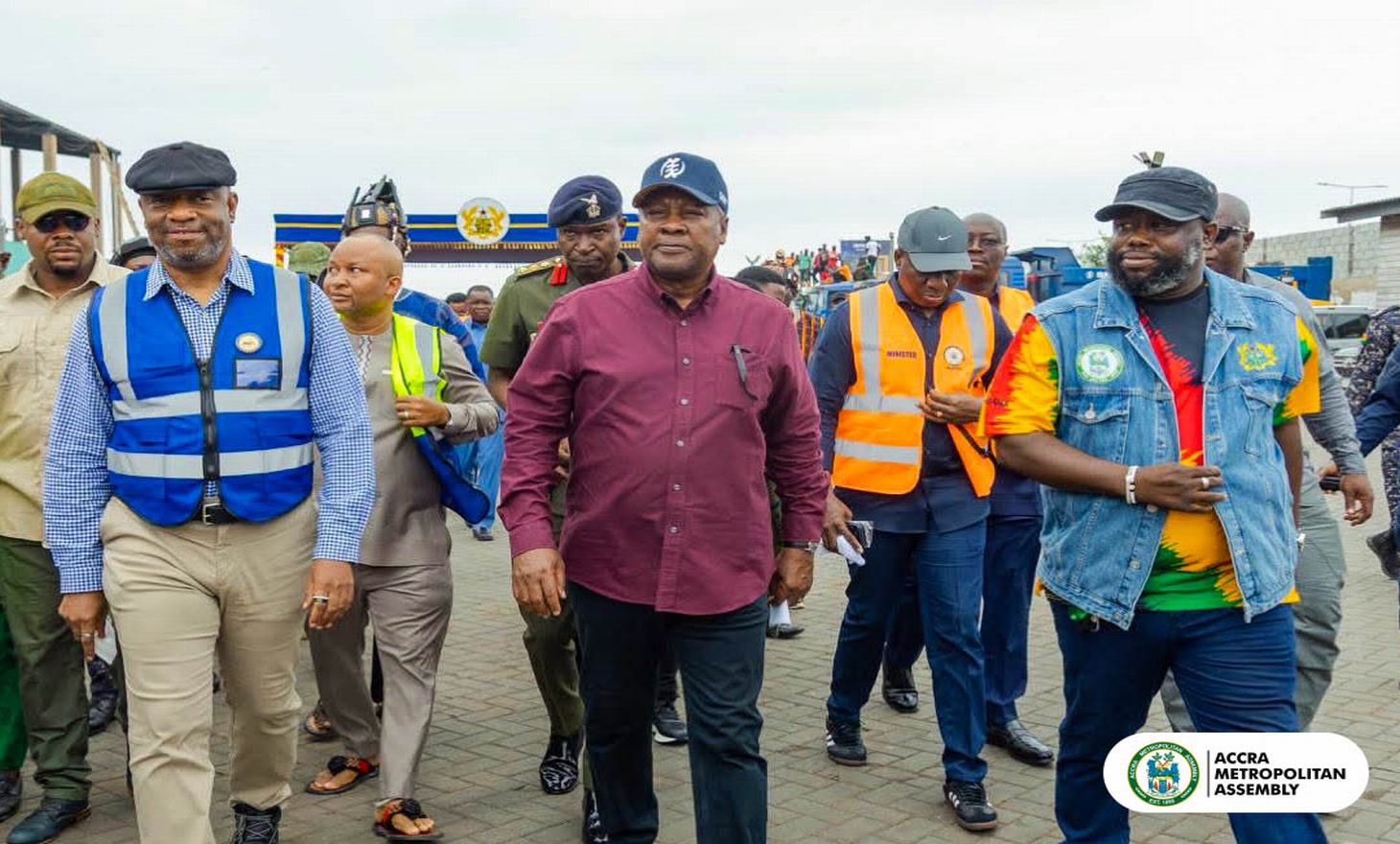
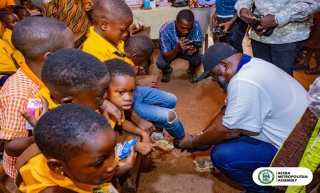
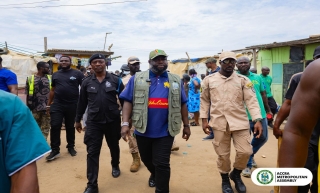
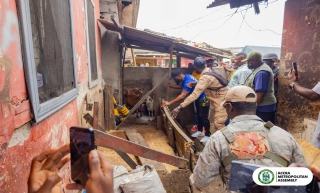
President John Dramani Mahama has charged the Accra Metropolitan Assembly, the Ablekuma Central Municipal Assembly and other local authorities to intensify enforcement of sanitation and protect reclaimed lands from renewed indiscriminate dumping after the Agbogbloshie waste evacuation exercise.
According to the President, the success of the ongoing evacuation exercise would depend not only on the removal of the accumulated waste but also on the ability of the assemblies to prevent the area from reverting to an uncontrolled dumping site.
Speaking at the commencement of the National Emergency Waste Evacuation Exercise at Agbogbloshie on Friday, 18th September 2026, President Mahama directed the assemblies to work closely with traditional authorities, community leaders and security agencies to ensure that the reclaimed land was protected and sanitation rules were strictly enforced.
He stressed that enforcement must be firm, fair and sustained, adding that the necessary arrangements had to be put in place while the evacuation exercise was still ongoing.
He noted that the Agbogbloshie exercise formed part of a broader effort to restore order, improve public health and reclaim degraded urban spaces for productive use.
He disclosed that the cleared site would support the proposed Agbogbloshie Urban Renewal Project, with plans to convert reclaimed portions of the land into an industrial area capable of supporting economic activity and employment.
He said government had mobilised heavy equipment, trucks, personnel and other resources for the exercise and expected the resulting sanitation gains to be protected through stronger local-level enforcement.
He announced that the District Roads Improvement Project (DRIP) equipment mobilised for the Agbogbloshie operation would subsequently be deployed to other districts and municipalities to support similar waste evacuation exercises where necessary.
President Mahama also touched on a broader national waste management programme which would involve the provision of household waste bins, additional transfer stations, engineered landfill facilities and expanded recycling infrastructure.
He called on residents, traders, businesses and transport operators to complement the enforcement efforts by disposing of waste responsibly and protecting public spaces from filth.
The President said drains, rivers, lagoons, markets, roadsides and open spaces had to be kept clean if Ghana was to achieve healthier and more resilient communities.
He maintained that lasting improvements in sanitation would require strong institutions, consistent enforcement and responsible behaviour by citizens, stressing that the country could not afford to repeatedly clear the same refuse dumps with public funds.

The Accra Metropolitan Assembly (AMA) is one of the Two Hundred and Sixty-One (261) Metropolitan, Municipal and District Assemblies (MMDAs) in Ghana and among the Twenty-Nine (29) MMDAs in the...Read More...
H72, Independence Avenue, Kinbu Garden
Digital Address: GA-143-6657
P. O. Box GP 385, Accra Central, Accra, Ghana
©Copyrights 2026 Accra Metropolitan Assembly. All rights reservedDeveloped by Akorsetec