Pay for your fees and charges Pay Now
+233 (0) 243 211 345 info@ama.gov.gh GA-143-6657
Pay for your fees and charges Pay Now
+233 (0) 243 211 345 info@ama.gov.gh GA-143-6657

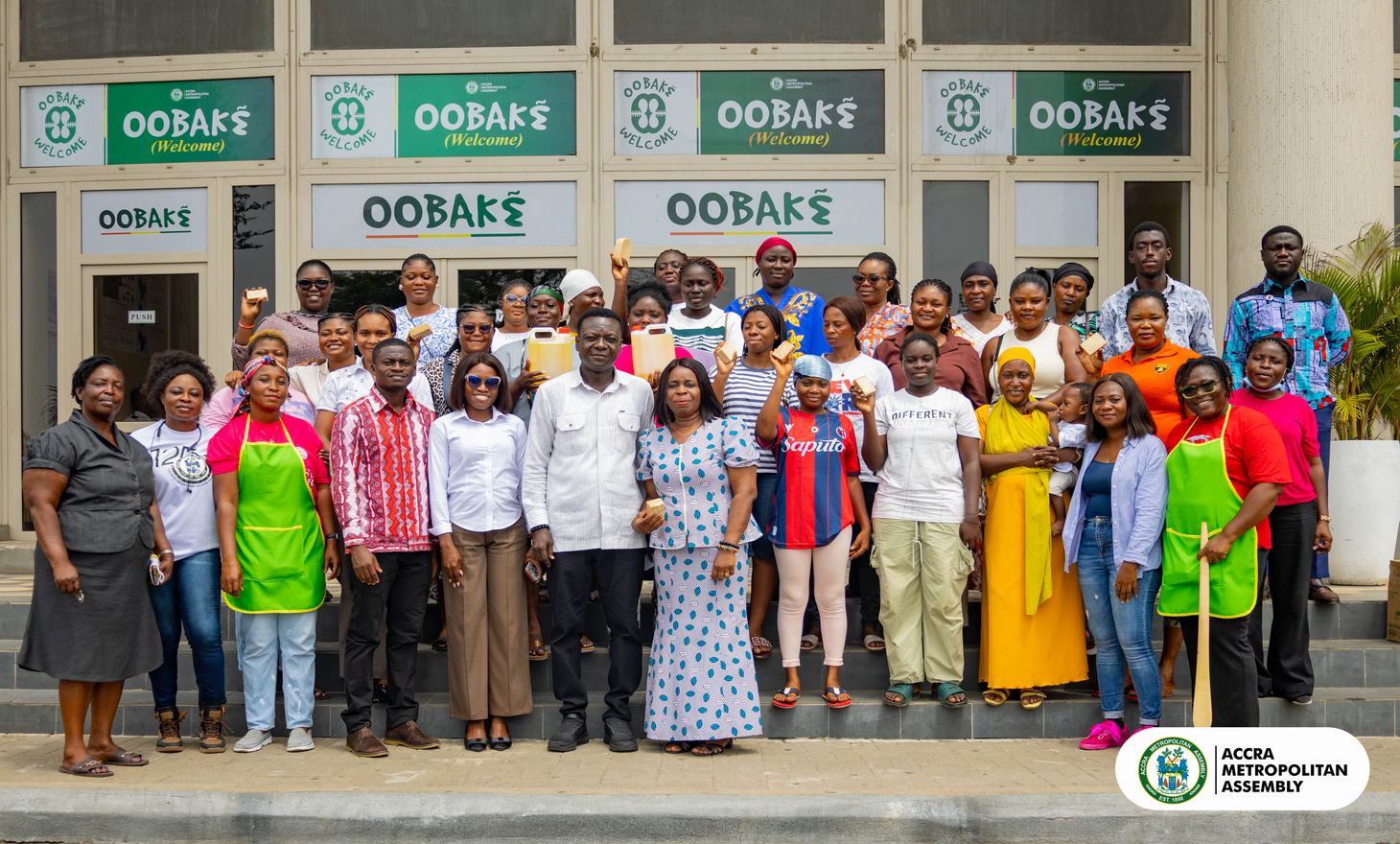
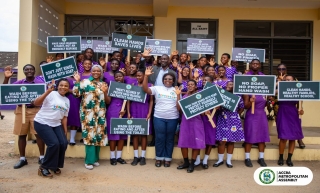
The Accra Metropolitan Assembly (AMA) has organised a free skills training programme for 50 women and unemployed youth in detergent production to promote self-employment and financial independence.
The initiative forms part of the Assembly's efforts to, among other things, reduce unemployment, promote entrepreneurship and create sustainable livelihood opportunities, particularly for women and young people within the metropolis.
The training provided beneficiaries with practical knowledge and training in liquid soap, bar soap and after-wash production, to enable them to establish small-scale businesses, generate income and improve their economic circumstances.
Beyond the skills training, participants were taught how to develop entrepreneurial discipline, adopt sound financial management practices and explore opportunities to expand their sources of income.
Speaking at the opening ceremony on behalf of the Mayor, the Metropolitan Coordinating Director, Mr Douglas N. K. Annoful, emphasised that the initiative reflected the Mayor's commitment to empowering women and unemployed youth through practical skills development and sustainable economic opportunities.
He explained that the programme was a deliberate intervention by the Mayor to equip beneficiaries with productive skills that could improve their economic circumstances and enable them to contribute meaningfully to their communities.
Mr Annoful urged participants to approach the training and skills acquired with seriousness, discipline and determination, stressing that the success of any business depended largely on the knowledge, practical experience and commitment of its operators.
Mr Annoful admonished beneficiaries to cultivate responsible financial management habits by saving part of their earnings, reinvesting profits and avoiding unnecessary expenditure that could affect the growth of their businesses.
He also disclosed that the Assembly would explore opportunities to link committed beneficiaries to the Business Advisory Centre (BAC) to facilitate access to potential financial support for establishing small-scale businesses.
The Head of the Department of Social Welfare and Community Development, Mrs Felicia Amoakohene, said the production of household cleaning products presented opportunities for participants to establish businesses within their communities, where demand for such products could provide a ready market.
She explained that empowering women economically had broader social benefits, as increased household incomes could improve family welfare and contribute to the development of local communities.
According to her, the department would undertake follow-up visits after the training to assess whether beneficiaries were putting their newly acquired skills into productive use.
 16.Oct.2026
 15.Oct.2026

The Accra Metropolitan Assembly (AMA) is one of the Two Hundred and Sixty-One (261) Metropolitan, Municipal and District Assemblies (MMDAs) in Ghana and among the Twenty-Nine (29) MMDAs in the...Read More...
H72, Independence Avenue, Kinbu Garden
Digital Address: GA-143-6657
P. O. Box GP 385, Accra Central, Accra, Ghana
©Copyrights 2026 Accra Metropolitan Assembly. All rights reservedDeveloped by Akorsetec